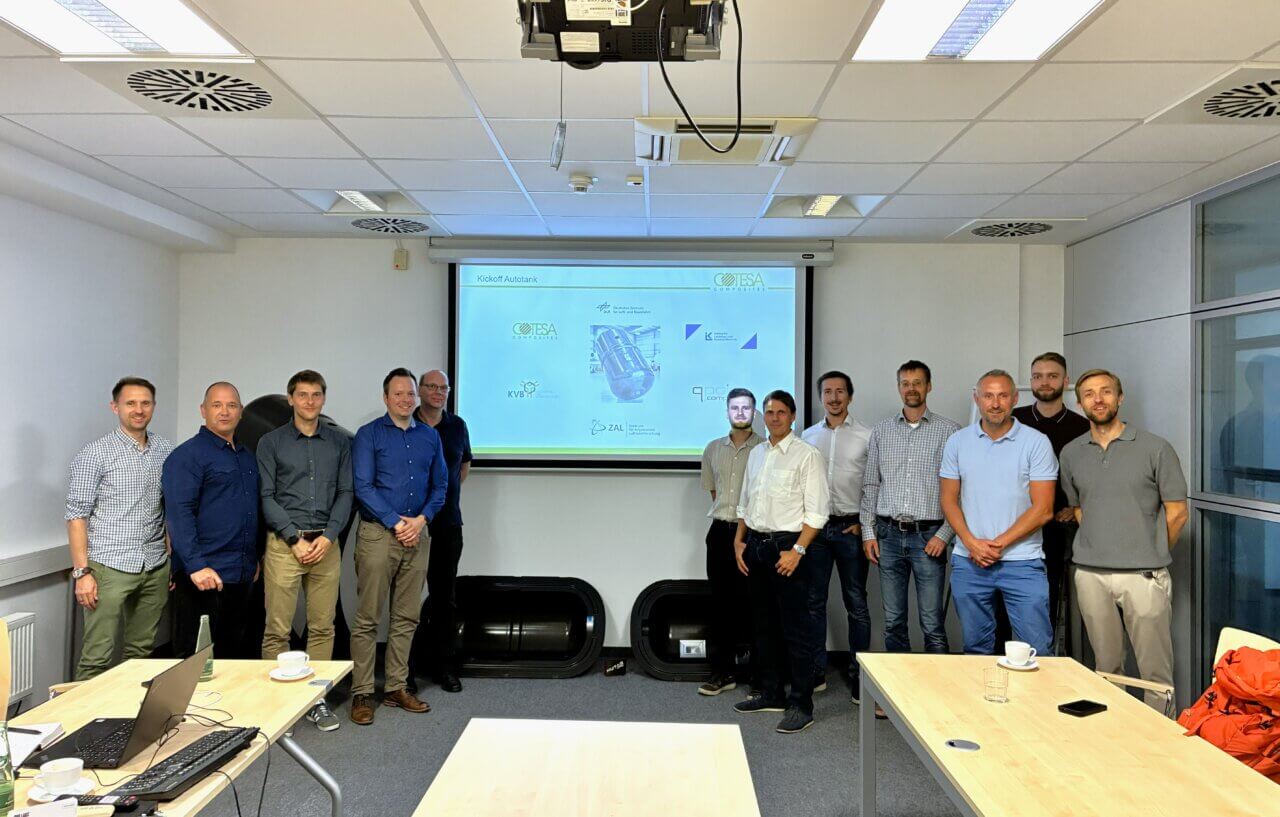
Aircraft water tanks made of fiber composites are lightweight but expensive to manufacture, because they are usually cured in a huge, heated pressure chamber: the autoclave. The AutoTank research project aims to make this process simpler and more efficient without an autoclave. A key building block comes from the 3D printer: an outer shell with integrated cooling channels that provides controlled cooling of the tank during curing. This makes production faster, cheaper and more sustainable.
Only simple at first glance
Whether for freshly brewed coffee or for washing hands, passenger aircraft need a lot of water on board, which is carried in large potable water tanks beneath the passenger cabin. What sounds like a simple container at first is in fact a surprisingly demanding component. And for good reason, considering that the tanks have to withstand pressure, vibration and constant load changes over thousands of flights. They must not only store the water safely, but must under no circumstances endanger other components. Even the smallest leak could have serious consequences, impairing sensitive on-board electronics or promoting long-term corrosion of metal parts. A leak-tight, flawless tank is an absolute must.
Light, but expensive
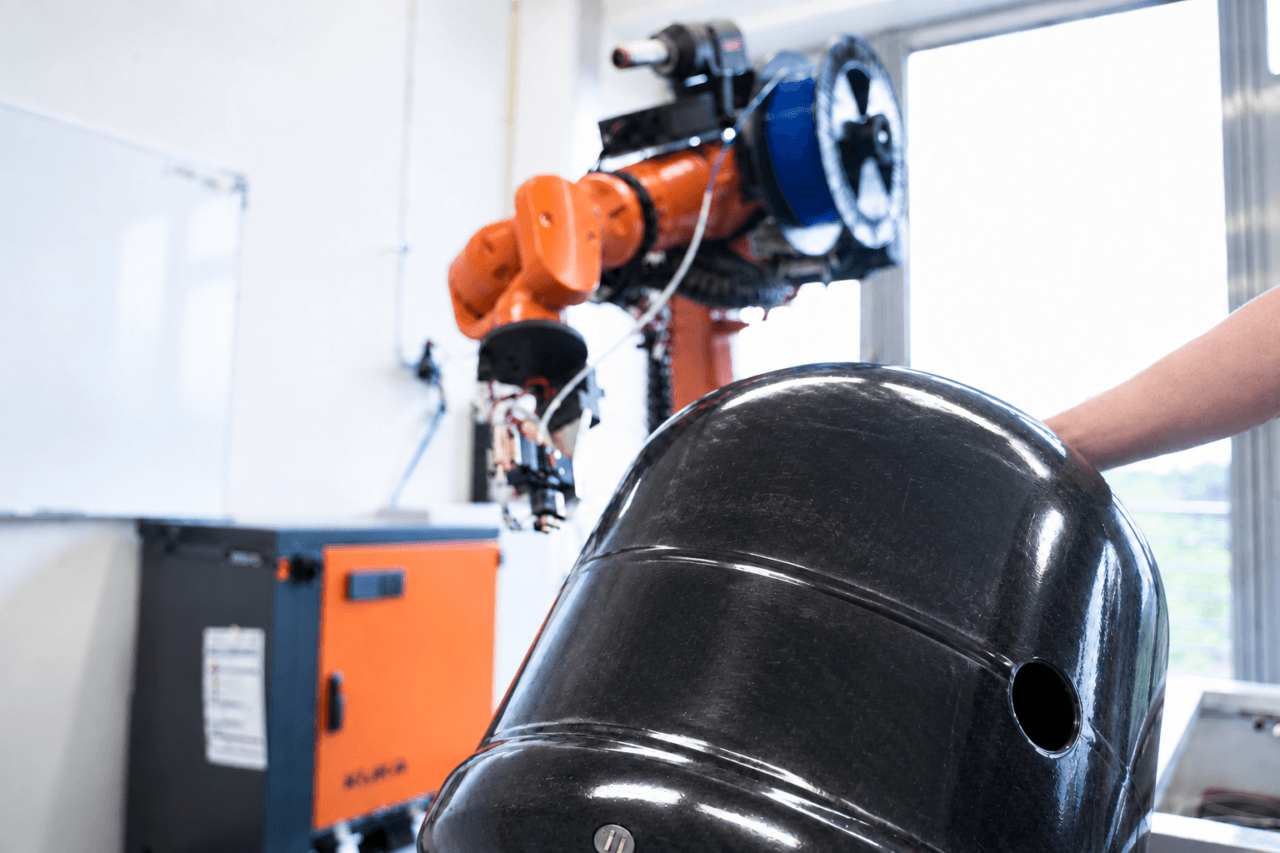
To keep weight to a minimum, the aviation industry manufactures these tanks from carbon fiber-reinforced plastic (CFRP). The material makes the tanks both light and strong, but manufacturing them is complex. Put simply, a fiber material pre-impregnated with epoxy resin (prepreg) is placed in a mold (the tool) and thus brought into the desired tank shape. The component is then cured in a precisely coordinated process: first, a vacuum draws out the trapped air, then high pressure and high temperature compress the material until it becomes dense and solid.
The challenge lies in the curing step. This process takes place in a room-sized pressure chamber, the autoclave. Heating it up for hours and keeping it at a constant temperature requires a great deal of energy. And because the entire chamber and its contents then have to cool down again, each cycle takes a correspondingly long time.
Integrated functions
This is exactly where the AutoTank research project comes in. Instead of in an autoclave, the tank is to be cured directly in a heatable mold (out of autoclave, or OoA for short). Internal pressure and vacuum continue to compact the material, but the enormous pressures of a room-sized pressure chamber are no longer needed.
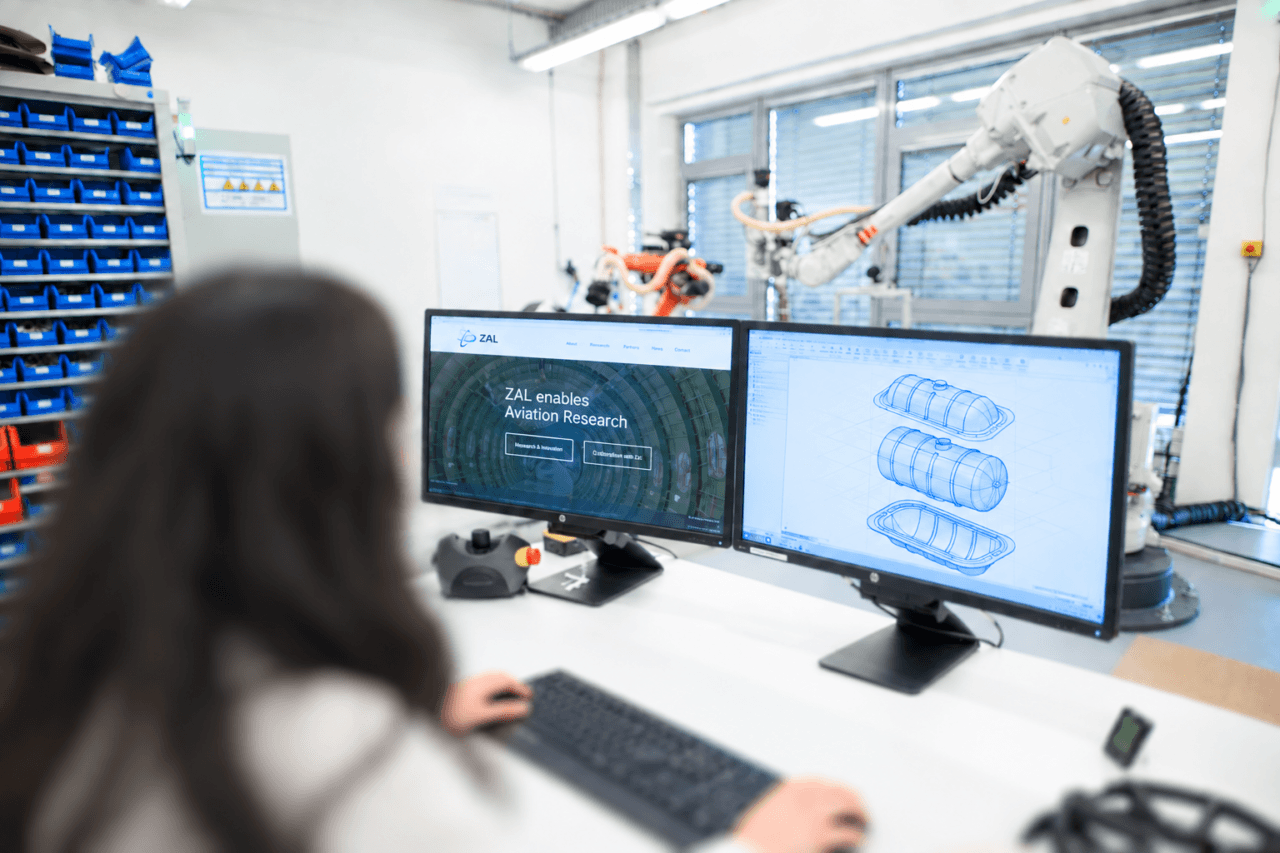
To ensure that the component still cures evenly, particularly well-controlled conditions are required. The outer shell of the tool plays a key role here. It is 3D printed, more precisely using a process for large-format components (Large Format Additive Manufacturing, LFAM). The major advantage is that cooling channels can be integrated directly into the shell. They allow the tool to cool down in a controlled manner during the process. This is the prerequisite for doing without the autoclave. In addition, a printed shell can be adapted to any tank variant with comparative ease.
A building block for more sustainable aviation
The printed outer shell is being developed by the engineers at ZAL GmbH. In the AutoTank project, they are investigating which functions can be integrated into the new shell.
A number of questions remain to be answered before the tank is ready:
- Which printing material can permanently withstand the temperatures at the heated tool without warping?
- Can the process be made even more efficient through targeted cooling and an insulating shell?
- Does the printed shell also need to take on a load-bearing function in order to withstand the process pressures inside?
If these challenges can be solved, the process has the potential to be transferred to many other components and thus contribute to greater sustainability in aviation.
Are you interested in additive manufacturing or do you have questions about the AutoTank project? Then share your thoughts with us and give us a call:

Partners
- Cotesa (consortium lead)
- ZAL GmbH
- Qpoint
- KVB Institut für Konstruktion und Verbundbauweisen gGmbH
- ILK Institut für Leichtbau und Kunststofftechnik, TU Dresden